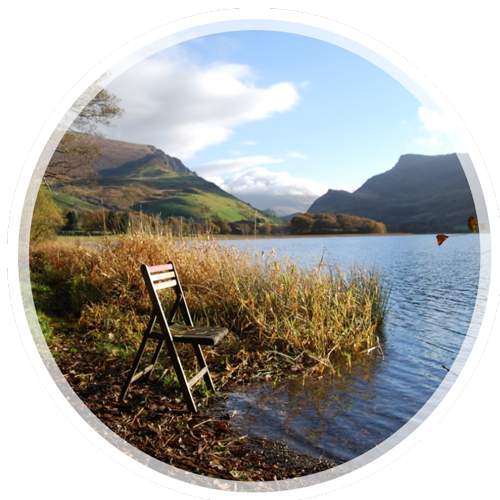
A Space to Be retreat or event is always co-created with participants. During the first gathering of the group, a plan will emerge for how the time together will be spent. At various points, there are opportunities to share experiences and reflections. Typically, the facilitator offers some options for more structured activities that might appeal to the group – there may be as many as 5 more structured sessions during a 3-day retreat, or as few as 1 in a half-day event.
If you are designing your own individual Space to Be retreat it is a good idea to think in advance how you will ‘shape’ the time and what activities you will undertake so you can have any materials that you plan to use to hand.
Some examples of activities are described below – and can, of course, be adjusted, as required by the group as well as being undertaken by individuals as part of their personal Space to Be experience.
Making sense of our senses
Activities that enable us to become more aware of how strongly our senses (of which there are many more than five!) influence and shape us.
For example, consider the sense of touch by closing your eyes and using your finger tips to explore two quite different textures – perhaps the bark of a tree trunk alongside the smooth and sharp features of a holly leaf.
Or, exploring one of the more elusive senses – when is something full of vitality and when is it lifeless (for example the difference between moving and stagnant water).
How can we use our sense more consciously to understand our selves, our responses and the world around us?
Imagery
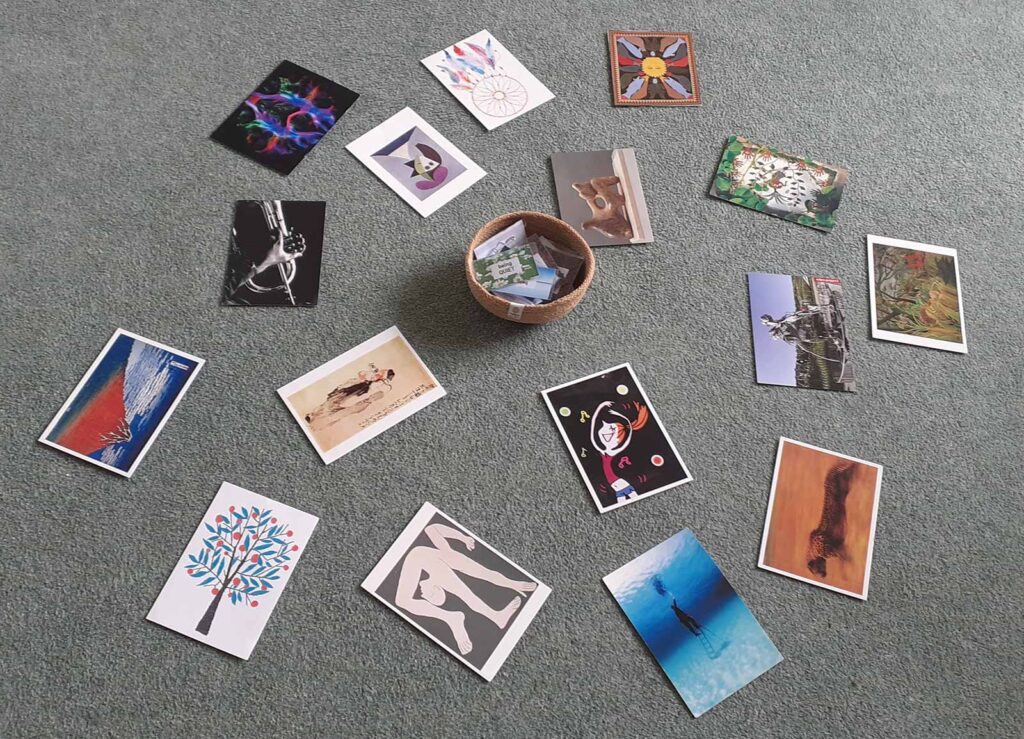
Images often ‘speak’ to us more directly and vividly than words. We can use art, metaphors, photographs, postcards, collage, drawing (perhaps with our eyes shut) as prompts for more imaginative responses to who we are, how we express ourselves and what we aspire to become.
Mapping
A map is a way of charting a place or planning a journey. Starting with a large empty piece of paper we can (taking our time to see what comes to mind) create a personal ‘map’ to convey where we have been, where we are now and where we might be heading – whether with paint, felt tips, collage or words (or a mix of all of these).
Journaling
This can be done in a number of ways. Sometimes spontaneously capturing our thoughts, reflections, feelings – something to re-visit at a later date that will remind us of things that felt Important.
Or journaling can be more formal / intentional – for example picking a topic from a pre-prepared selection and seeing what it evokes and where it takes you. In other words, accepting the element of chance or fate…
Story sharing
As far as we can tell, stories feature in all cultures and traditions – often handed down from one generation to the next as ways of teaching, memorialising and / or community-building. What stories do we have inside us? How can we share them? And what can we learn from each other’s?
The ground on which we stand
Exploring what makes us who we are – our inherited characteristics, how our experiences have shaped us over time, the talents we were born with or have acquired, our values and beliefs. Are we warriors or peace-makers? Are we innovators or activists? Are we co-ordinators or shapers?
How does who we are influence how we behave and how we respond to other people or to events?
In what ways can we reflect and capture our insights into who we are and how we feel about an issue or a place or our world?
In many Space to Be events, collage (using images, graphics, headlines and phrases from magazines or newspapers as a basis for picture-making) has become a regular feature…
… at other times it is haikus (a 3-line poem format originating in Japan) that has caught the imagination…
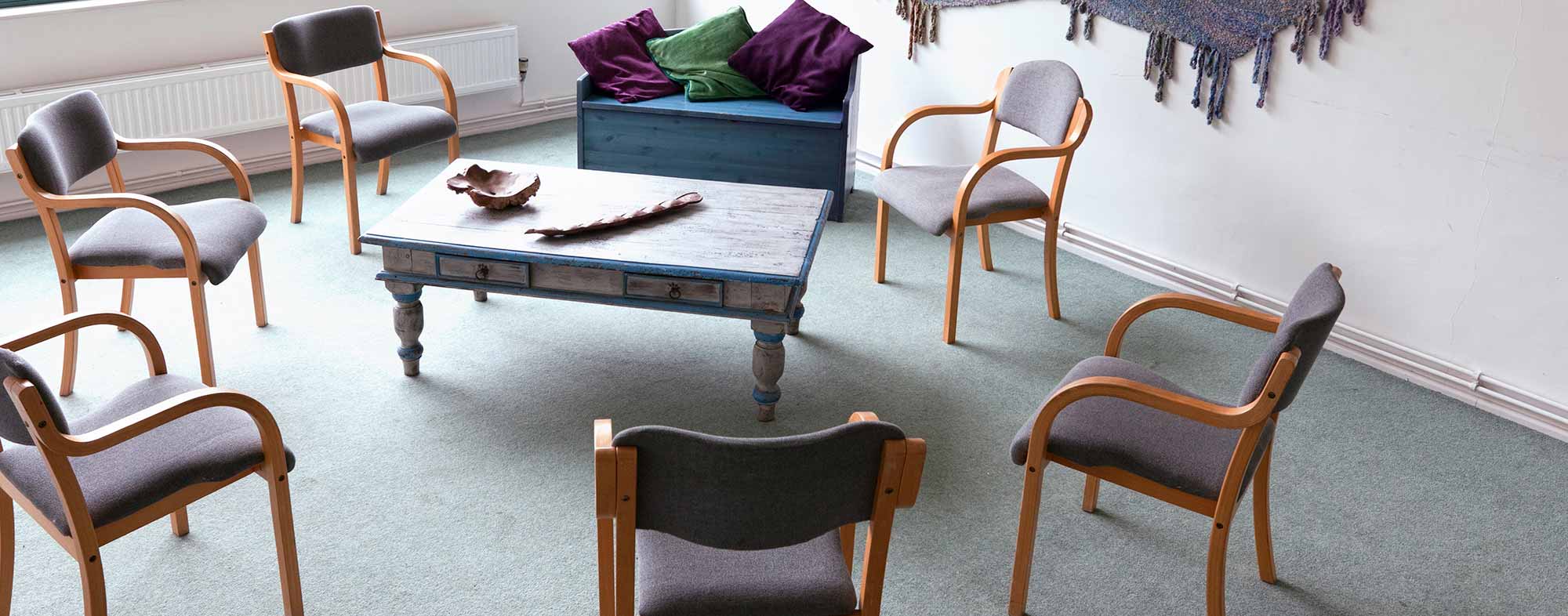
Circle conversations – when at a group Space to Be event
Making the most of the opportunity to listen attentively and to speak with clarity – leaving space between what one person has said before the next person speaks… this is both an art and a science. When it works well, it can have an almost musical / rhythmical / healing quality
EVERYTHING
is always optional!
Other activities…
…can be offered and led by members of the group or be drawn from each individual’s own ‘portfolio’ of activities and experiences when in a Space to Be retreat on their own – for example: music-making; mindfulness meditation; creating sculptures out of found objects in the landscape; silent walking or wilderness walks and more…
Opening & closing
For those who like to start and end in a meditative spirit, it is always a possibility to ‘bookend’ any Space to Be activity with quiet sitting (or standing or lying down) sessions.
These may be introduced by music to help still the mind or to focus on deep breathing or reading a mantra (from a spiritual teacher or one you have created for yourself) or verse to give something to focus on. The intention being to still the mind, relax the body and soothe the soul.
No Words
Bobbie, April 2022
There is no word for the flight, not gliding, not soaring, not floating, not drifting.
There is no word for the call, not tweeting, not bleating, not baaing, not quacking.
There is no word for the climb, not clambering, not stepping, not hopping, not frolicking.
There is no word for the touch, not fluffy, not oily, not spikey, not rough.
There is no word.
There are no words for the sound I can’t hear,
For the touch I don’t feel,
For the face I can’t see,
For the words you don’t say,
For the thoughts we don’t share.
There are no words.
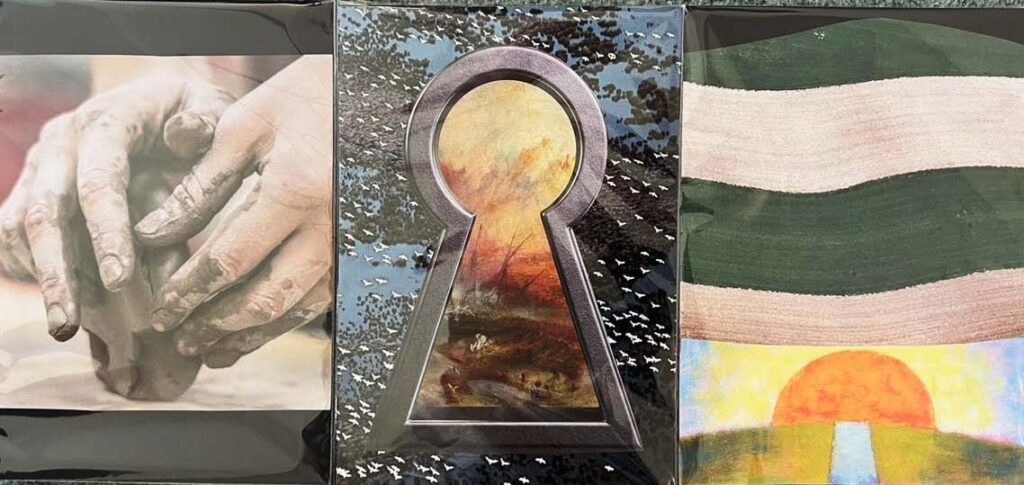
Space to Be – Triptych by Jeanette